
Satyajit Naik’s career reflects policing across security, disaster response and mass gatherings.
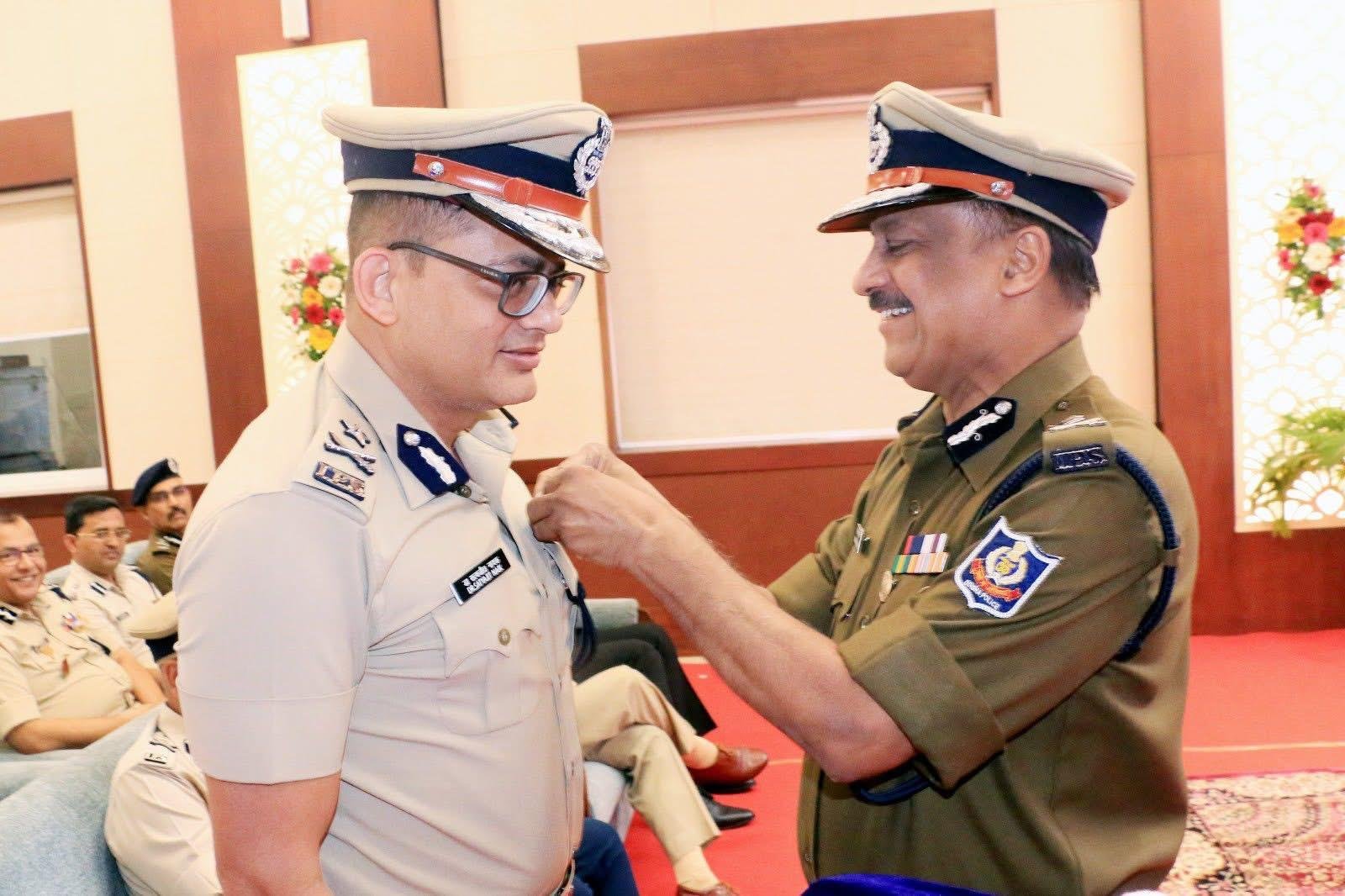
CUTTACK,14/09(PPT): Dr. Satyajit Naik, a 2008-batch Indian Police Service officer of the Odisha cadre, has built a career spanning field policing, internal security, investigation, disaster response and management of large public gatherings. Currently Inspector General of Police, Central Range, Cuttack, Mr. Naik has been recognised with the Governor’s Medal and the DGP’s Disc for his service.
He assumed charge as IGP, Central Range, on January 1, 2026. The Central Range comprises seven districts — Cuttack, Puri, Khordha, Nayagarh, Jagatsinghpur, Kendrapara and Jajpur — making it one of the State’s important policing jurisdictions. The range encompasses major urban centres, coastal areas and prominent religious destinations, and regularly witnesses large gatherings associated with festivals, pilgrimage and public events.
The responsibilities of the range include maintaining law and order, preventing and detecting crime, regulating traffic, responding to disasters and coordinating security arrangements during events that attract large numbers of people.
From field policing to specialised assignments
During more than 17 years in the IPS, Mr. Naik has served in a number of operational and specialised assignments. His field postings have included Superintendent of Police in Deogarh and Gajapati, including areas that have faced internal security challenges.
He has also served in specialised units, including the Special Task Force of the Crime Branch, the National Investigation Agency and the Economic Offences Wing. These assignments exposed him to investigations involving organised crime, economic offences and national security-related cases.
His tenure as Deputy Inspector General of Police, Eastern Range, covering Balasore and Bhadrak, involved handling law-and-order situations in two districts with a history of communal sensitivities and security concerns.
During this period, police operations also covered issues relating to infiltration and wildlife crime, including cases connected with the Similipal landscape. His responsibilities involved supervision of investigations, deployment of police forces and coordination with district administration and other agencies.
Handling large public gatherings
Managing large gatherings has been a recurring feature of Mr. Naik’s assignments. As IGP, Central Range, he has been involved in the security planning for the annual Rath Yatra in Puri, one of Odisha’s largest religious congregations.
The 2026 Rath Yatra brought together several lakhs of devotees from Odisha and other parts of the country and abroad. The policing arrangements involved crowd management, traffic regulation, surveillance, crime prevention and coordination with the civil administration and other agencies.
More than 470 high-definition CCTV cameras were deployed as part of the surveillance arrangements, according to his service record, with real-time monitoring used to keep track of movement in key areas.
The scale of the exercise was particularly challenging because of the continuous movement of pilgrims along the Bada Danda and the pressure on roads and other access routes. The police deployment also had to account for traffic management and emergency response while maintaining the movement of devotees.
The Odisha Police issued appreciation and commendation for the successful conduct of the Rath Yatra in 2026. Mr. Naik had also been associated with the policing arrangements for the Rath Yatra in 2023, which similarly drew a large congregation.
He was subsequently conferred the “Ratha Seva Samman–2026” in Puri for his contribution to the safe and orderly conduct of the festival.
While receiving the honour, Mr. Naik expressed appreciation for the contribution of police personnel, administrative officials, servitors, volunteers and citizens involved in the arrangements. He described service to devotees during the Rath Yatra as both a professional responsibility and an opportunity to serve at the Jagannath shrine.
Security during presidential visit
Another major responsibility came in August 2026, when the President of India visited Odisha from August 3 to 5.
The visit included programmes in Bhubaneswar, Cuttack, Berhampur and Ganjam district and involved extensive road and rail travel. Such visits require detailed advance planning, route sanitisation, traffic regulation, coordination between security agencies and district-level deployment.
According to the DGP’s commendation recorded in Mr. Naik’s service profile, his planning, coordination and supervision contributed to the peaceful conduct of the visit.
The assignment was significant for the Central Range as it involved movement across different locations and coordination among several agencies over multiple days.
Disaster response
Mr. Naik’s service has also included responsibilities during natural disasters. During Cyclone Dana, police and civil administration agencies were involved in evacuation, rescue and emergency response operations in vulnerable parts of coastal Odisha.
At Tihidi in Bhadrak district, a night rescue operation resulted in the recovery of 30 people. The operation required coordination between the police, district administration and emergency-response agencies.
The experience is part of a wider shift in the role of the police in Odisha, where forces are increasingly required to participate in evacuation, rescue, traffic management and restoration of essential public order during cyclones and other extreme weather events.
Communal harmony and festival policing
During his tenure in the Eastern Range, Mr. Naik was also involved in maintaining law and order during major religious festivals.
The DGP’s appreciation and commendation for his work during Ram Navami and Hanuman Jayanti celebrations in Balasore and Bhadrak in 2025 cited advance planning, deployment and coordination as factors that helped ensure the festivals passed off peacefully.
Festival policing in districts with a history of communal sensitivity requires advance assessment of potential flashpoints, deployment of adequate personnel, coordination with organisers and community representatives, and prompt response to emerging situations.
The emphasis on preventive measures has been a recurring element in Mr. Naik’s policing assignments.
Focus on road safety and cybercrime
In the Central Range, road safety and cybercrime have emerged as important areas of enforcement.
Special road-safety drives have been intensified during pilgrimage, holiday and picnic seasons, with police focusing on vehicle documentation, traffic violations and compliance by passenger and high-occupancy vehicles.
The measures are aimed at reducing accidents and ensuring safer movement on roads during periods when traffic volumes increase substantially.
Cyber-enabled financial fraud is another area receiving attention. Police units have been directed to strengthen public awareness, prevention and investigation of online fraud cases, reflecting the growing importance of technology-related offences in day-to-day policing.
Initiatives aimed at improving the accessibility of police services, including child-friendly policing measures, are also part of the broader emphasis on citizen-oriented policing.
Recognition for service
Mr. Naik’s career has brought several awards and commendations.
He received the Governor’s Medal on Republic Day in 2026 for distinguished service. He was also conferred the DGP’s Disc on the occasion of the 90th Odisha Police Formation Day for his performance while serving as DIG, Eastern Range.
His earlier honours include the Internal Security Service Medal in 2017 from the Ministry of Home Affairs for his contribution to countering Naxal activities. His service record also lists an NCRB Running Trophy for the use of information technology in policing, the SKOCH Governance Award in 2023 and a DG, NIA commendation.
He has also received appreciation for policing and security responsibilities associated with major national and international events, including the Asian Games and the World Cup Hockey.
The recent commendations for the Rath Yatra, presidential visit and festival management add to a service record that spans both routine policing and high-pressure assignments involving large gatherings and public-order challenges.
Academic interests and public policy
Mr. Naik’s academic background is distinct from the conventional policing route. He holds a Bachelor of Veterinary Science and Animal Husbandry degree from the Odisha University of Agriculture and Technology, Bhubaneswar.
He later obtained a Master’s degree in Police Management from Osmania University and completed the Advanced Management Programme in Public Policy at the Indian School of Business.
At the ISB, he received distinctions including Scholar of Excellence and Dean’s List recognition.
His academic work has also examined the Naxal insurgency in Odisha. His policy analysis argued for an approach that complements security operations with development, social inclusion and community participation in areas affected by insurgency.
A shift towards preventive policing
Mr. Naik’s stated policing philosophy places emphasis on what is broadly described as “people-centric policing”. The approach combines conventional enforcement with preventive measures, community interaction, intelligence-led policing and the use of technology.
For an officer overseeing the Central Range, such an approach has relevance beyond conventional law-and-order duties. The region includes the State’s commercial and administrative centres as well as major pilgrimage destinations and coastal districts vulnerable to natural disasters.
The policing challenges consequently range from managing crowds during the Rath Yatra to responding to cyclones, controlling traffic, tackling cybercrime and maintaining communal harmony during festivals.
A career across varied policing challenges
From district policing and counter-insurgency operations to specialised investigation, disaster response and large-scale event management, Mr. Naik’s career has covered a wide range of policing responsibilities.
His present assignment as IGP, Central Range, places him in charge of policing seven districts with diverse demographic, geographical and security requirements.
His record of awards and departmental commendations reflects recognition for work in internal security, technology-enabled policing, public-order management and the conduct of major events.
As policing increasingly involves coordination with civil agencies, use of technology and engagement with communities, Mr. Naik’s career illustrates the expanding responsibilities of senior police officers in managing both conventional law-and-order duties and emerging public-safety challenges.