
Teachers — The Architects of Character and the Nation’s Future.
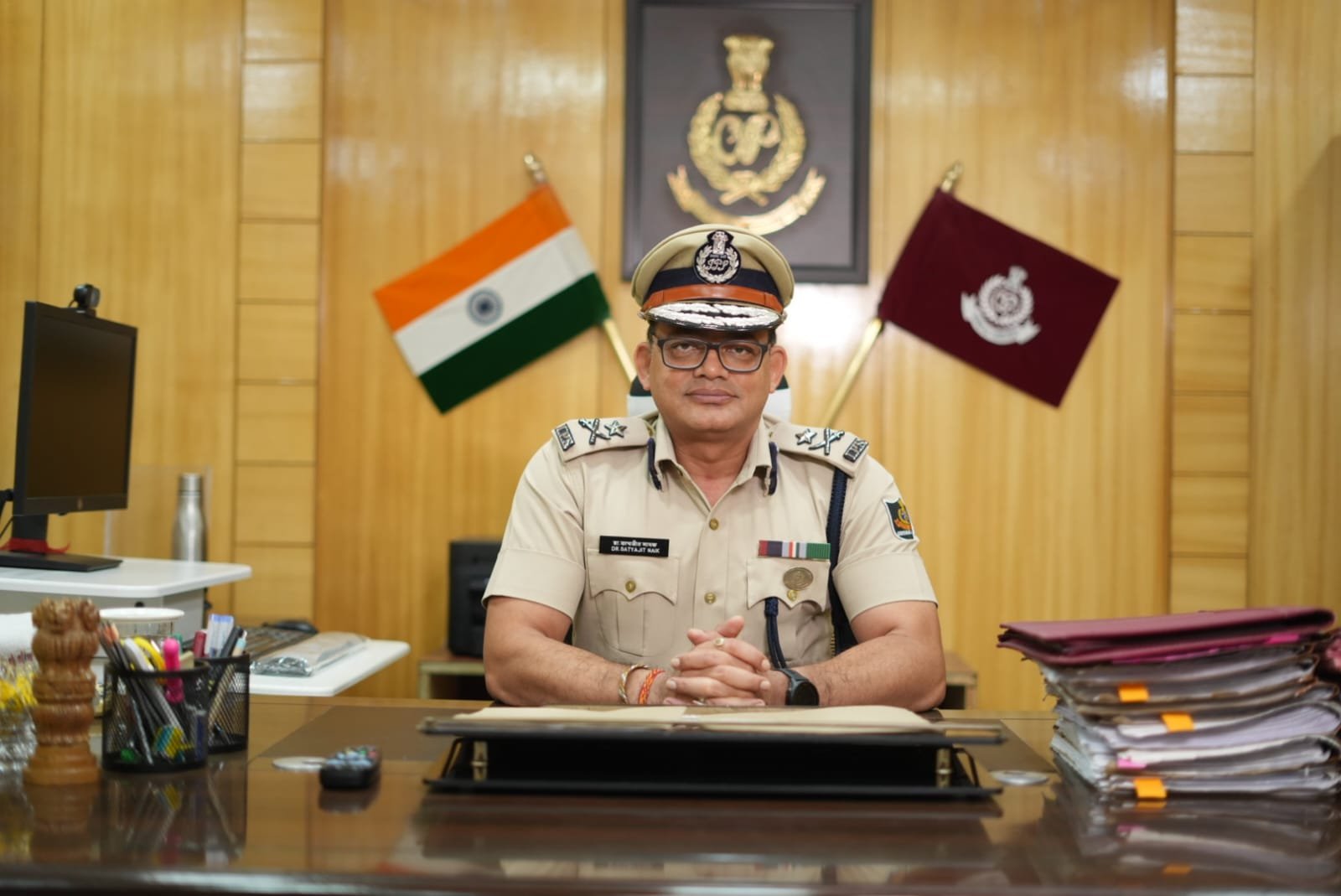
Dr. Satyajit Naik, IPS
Inspector General of Police, Central Range, Odisha
As India prepares to observe Teachers’ Day on September 5, the occasion offers us an opportunity to pause and reflect upon one of the most profound influences in our lives—the influence of a teacher.
Teachers are among the quietest nation-builders. They may not always occupy the headlines, but their work shapes generations. Behind every accomplished professional, every responsible citizen and every institution of a successful society, there are teachers who imparted knowledge, encouraged curiosity, corrected mistakes, nurtured confidence and, most importantly, helped shape character.
A teacher does much more than teach a subject. A teacher teaches us how to think, how to question, how to distinguish right from wrong, how to deal with failure and how to become better human beings.
The celebrations of Teachers’ Day may last for a day, but the influence of a dedicated teacher can last a lifetime.
Remembering Dr. Sarvepalli Radhakrishnan
Teachers’ Day in India is celebrated on September 5, the birth anniversary of Dr. Sarvepalli Radhakrishnan, one of India’s most distinguished philosophers, scholars and statesmen.
Dr. Radhakrishnan served as India’s first Vice-President from 1952 to 1962 and subsequently became the country’s second President, serving from 1962 to 1967. But before entering public life, he had already established himself as an eminent teacher and scholar of philosophy.
His academic career reflected his deep commitment to education. He taught at several leading institutions and earned immense respect from students and academic colleagues. His life demonstrated that education is not merely the transfer of information but the cultivation of intellect, values and human potential.
The tradition of observing September 5 as Teachers’ Day began in 1962. When his students and admirers wanted to celebrate his birthday, Dr. Radhakrishnan suggested that the day instead be dedicated to teachers. The suggestion was characteristic of his humility and reflected his conviction that the teaching profession deserved the highest respect.
Thus, Teachers’ Day is not merely a celebration of one eminent individual. It is a tribute to every teacher who contributes to the making of a better society.
The Classroom: A Workshop of Citizenship
The strength of a nation cannot be measured only by its economic growth, technological advancement or physical infrastructure. The real strength of a nation lies in the character, competence and compassion of its citizens.
Teachers play a central role in creating these citizens.
Every doctor, engineer, scientist, entrepreneur, civil servant, soldier, police officer, artist, writer and sportsperson has, at some point, been influenced by a teacher. Often, behind a successful individual stands a teacher who recognised potential before the world did.
A classroom, therefore, is much more than a place where lessons are taught. It is a workshop of citizenship.
It is where children learn punctuality, discipline, cooperation, respect, fairness and responsibility. It is where they learn that success comes with effort and that failure is not the end of the journey.
A teacher may teach thirty or forty students in a classroom, but the values imparted to those students can eventually influence thousands of people through their actions and professional lives.
In that sense, teaching is one of the most consequential forms of public service.
Beyond Marks and Examinations
Education must aspire to something greater than examination results.
Academic excellence is undoubtedly important. But a successful education system should produce not merely high scorers, but responsible citizens.
Young people need knowledge, but they also need integrity. They need professional skills, but they also need empathy. They need ambition, but they must understand responsibility. They need the confidence to compete globally while remaining rooted in the values that hold society together.
Every child is different.
One may excel in mathematics, another in science. One may possess exceptional sporting ability, while another may have a talent for music, literature, art or public speaking. Some children may demonstrate their abilities early, while others may require patience and encouragement before their potential becomes visible.
A committed teacher looks beyond marks.
The teacher asks not merely, “What has this child achieved?” but also, “What can this child become?”
That difference can change a life.
The Power of Encouragement
Many children carry invisible burdens—fear of failure, lack of confidence, uncertainty about their abilities or difficulties at home and in their surroundings.
Sometimes, a single encouraging word from a teacher can change the direction of a young life.
A teacher who tells a struggling student, “You can do it,” may give that child the confidence to try once more. A teacher who recognises an unusual talent may open a door to a future that the child had never imagined.
Teachers are therefore not merely instructors. They are often mentors, counsellors, motivators and role models.
The influence of a good teacher frequently begins where the textbook ends.
Years later, students may forget a formula, a definition or a historical date. But they often remember the teacher who believed in them, challenged them, encouraged them or taught them an important lesson about life.
The Teacher as a Role Model
Children learn not only from what teachers say, but also from what teachers do.
A teacher who demonstrates punctuality teaches the value of time.
A teacher who listens patiently teaches empathy.
A teacher who admits a mistake teaches humility.
A teacher who treats every student with dignity teaches equality.
A teacher who refuses to compromise on integrity teaches courage.
This is why the personal example of a teacher can sometimes be more powerful than a hundred lectures.
Young minds are constantly observing the adults around them. The conduct of teachers therefore becomes part of the education itself.
Teachers in the Digital Age
The role of teachers has become even more important in today’s rapidly changing technological environment.
We live in an age where information is available almost instantly. Digital classrooms, online learning platforms, artificial intelligence and educational technologies have transformed access to knowledge.
A student can now obtain information about almost any subject within seconds.
But information is not wisdom.
Technology can provide answers, but teachers help students ask the right questions. Technology can provide data, but teachers provide context. Artificial intelligence can generate content, but teachers nurture judgement, creativity, ethics and emotional intelligence.
The teacher of the future therefore need not compete with technology. Instead, technology should become an instrument that enables teachers to mentor and educate more effectively.
At the same time, young people must be taught to use technology responsibly.
The digital world brings enormous opportunities, but also challenges—misinformation, cybercrime, online addiction, social-media pressures, privacy concerns and the misuse of artificial intelligence.
Digital literacy must therefore increasingly become part of responsible citizenship.
A technologically capable young person must also understand digital ethics, responsibility and consequences.
Teachers and the Values of a Developed India
India stands at an important moment in its development journey. Our aspirations are enormous. We seek innovation, economic prosperity, scientific advancement and global leadership.
But development cannot be sustained without values.
We need young citizens who are technologically capable but socially responsible; professionally successful but ethically grounded; confident but compassionate; ambitious but conscious of their duties towards society.
Teachers are the custodians of this transformation.
Values such as constitutionalism, equality, justice, fraternity, respect for diversity and responsibility towards society must be nurtured from the classroom itself.
A nation cannot build a strong future merely by building stronger institutions. It must build stronger individuals.
And teachers are at the heart of that endeavour.
The Joy of Teachers’ Day
For students, Teachers’ Day is also a day of enthusiasm, creativity and affection.
Schools across India organise cultural programmes, debates, speeches, games, performances and special presentations to honour teachers. Students prepare greeting cards, flowers and small gifts as expressions of gratitude.
One of the most cherished traditions is the role reversal, where senior students temporarily take over classroom responsibilities and teach junior students. Experiencing the responsibilities of a teacher, even for a day, often gives students a new appreciation of the patience, preparation and commitment required for teaching.
In some schools, students also dress up as their favourite teachers and imitate their mannerisms in a light-hearted and respectful manner.
Classrooms and school premises are decorated, cultural programmes are organised, and teachers and students sometimes participate together in games and other activities.
These celebrations strengthen the bond between teachers and students.
But beneath the celebrations lies a deeper message: gratitude.
A Tribute to Every Teacher
Our gratitude on Teachers’ Day should extend beyond celebrated educators whose names appear in textbooks.
It should include every teacher who arrives early, stays late, prepares lessons, evaluates assignments, counsels students, encourages the hesitant and quietly carries the responsibility of shaping young lives.
It should include the teacher in a metropolitan school and the teacher working in a remote village. It should include educators working with abundant resources and those who create possibilities despite limitations.
Their contribution may not always receive awards, headlines or public recognition. Yet their influence can continue for generations.
The greatest tribute we can offer teachers is therefore not confined to a bouquet or a greeting card. It is to carry forward the values they have taught us.
When we act with integrity, we honour our teachers.
When we help someone who is struggling, we honour our teachers.
When we pursue excellence without compromising our values, we honour our teachers.
When we use knowledge for the betterment of society, we honour our teachers.
Investing in Teachers, Investing in the Future
Teachers’ Day should also remind society that respecting teachers means creating an environment in which they can perform their responsibilities with dignity, resources and freedom to innovate.
We must invest not only in school buildings and digital infrastructure, but also in teacher training, professional development, research, innovation and the well-being of educators.
The quality of education can never rise significantly above the quality of those who deliver it.
A nation that wants to build a knowledgeable, innovative and ethical generation must place its teachers at the centre of its development agenda.
As India moves forward, the teacher will remain indispensable—not because teachers possess all the answers, but because they have the ability to help young people discover the answers for themselves.
At its heart, education is about developing the human personality and the moral and intellectual capacities of individuals.
That is why the power of a teacher is so profound.
When we invest in a teacher, we invest in generations.
When we empower a teacher, we empower society.
And when a teacher shapes one young mind with knowledge, character and compassion, that teacher contributes to shaping the future of the nation.
On this Teachers’ Day, let us remember with gratitude every teacher who has taught us, guided us, corrected us, encouraged us and believed in us.
The celebrations may last only a day. The lessons of a great teacher can last a lifetime.
My heartfelt gratitude and deepest respect to every teacher.
Happy Teachers’ Day!