
From AI Research to Parliament .
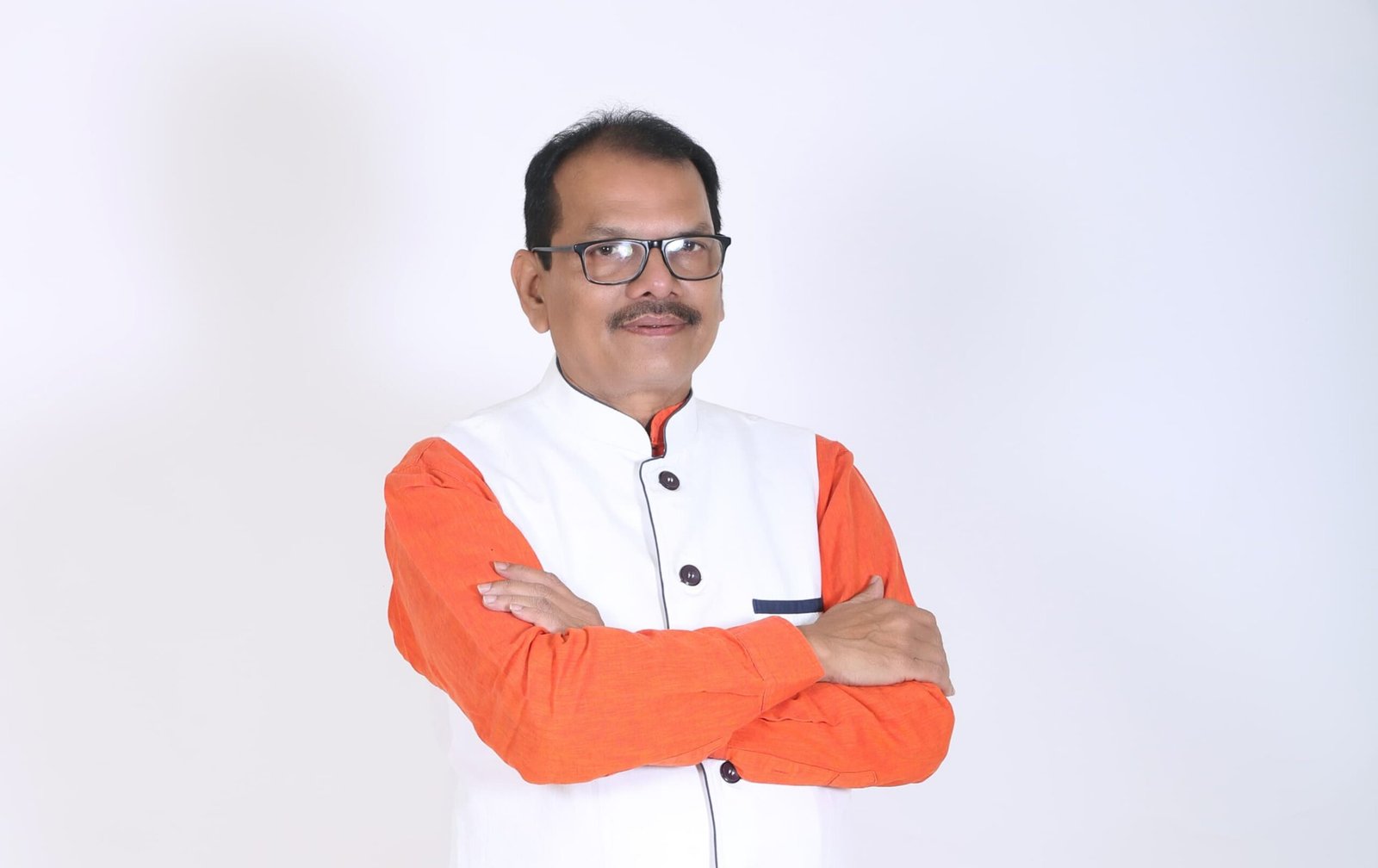
JAJPUR,05/09(PPT): From a village in Jajpur to the national capital, Dr Rabindra Narayan Behera’s journey has moved through academia, Artificial Intelligence research, government technology services and, now, parliamentary politics. But as a Lok Sabha member, one of the most significant development initiatives associated with his constituency is the proposed development of National Waterway-5 (NW-5), aimed at creating an inland cargo corridor linking Odisha’s mineral and industrial hinterland with the ports of Paradip and Dhamra.
The Union government has announced the operationalisation of NW-5 in Odisha as part of its plan to operationalise 20 new National Waterways over the next five years. The project is intended to connect mineral-rich areas such as Talcher and Angul, industrial centres including Kalinganagar, and the ports of Paradip and Dhamra.
The latest government proposal estimates the cost of the project at around ₹13,086 crore. The initial priority is a 332-km economically viable stretch between Talcher and Paradip/Dhamra, designed for movement of cargo by inland water transport.
For Jajpur, the significance goes beyond transportation. The waterway could potentially strengthen the region’s industrial logistics network while creating opportunities for agriculture, irrigation, flood management and related infrastructure.
A new transport corridor for Odisha
NW-5 was declared a National Waterway in 2008 and covers a network of waterways associated with the Brahmani and Mahanadi delta systems, the Matai River and the East Coast Canal. The notified waterway has a total length of about 588 km.
The current development plan focuses initially on 332 km between Talcher and Paradip/Dhamra. The project is expected to facilitate the movement of commodities such as coal, steel, coking coal and limestone, providing an alternative to road and rail freight. Government estimates indicate the potential for substantial cargo movement through the corridor.
For an industrial state such as Odisha, the project has strategic importance. Efficient inland transportation could reduce pressure on highways and railways while improving the movement of bulk commodities between production centres and ports.
Barrages with multiple benefits
One of the distinctive features of the NW-5 project is the proposed construction of water-control structures along the waterway.
Government studies have examined the use of barrages and check dams to maintain the required water level for navigation. An IIT Guwahati assessment confirmed the feasibility of impounding water through barrages at five locations and check dams at two locations.
This gives the project a significance beyond cargo transportation. Properly planned water-control infrastructure could have potential benefits for irrigation and flood management, particularly in areas dependent on the Brahmani river system.
The challenge will be to ensure that navigation, irrigation, flood control and ecological considerations are addressed through an integrated water-management strategy.
From technology to infrastructure
Behera’s professional background gives a different dimension to his role in public life. Before entering electoral politics, he worked for the National Informatics Centre and rose to the position of Senior Technical Director.
His academic career included research in Artificial Intelligence at Utkal University. His experience in technology and e-governance provided him with an understanding of how large government systems are planned, implemented and monitored.
That experience now meets a very different challenge: translating infrastructure proposals into outcomes that directly affect people and the regional economy.
Jajpur at the centre of industrial growth
Jajpur occupies a strategically important position in Odisha’s industrial geography. Kalinganagar has emerged as a major industrial hub, while the wider region is linked to mineral-producing areas and the ports along the Odisha coast.
A functional inland waterway could strengthen these linkages by providing an additional freight route. The proposed system is expected to connect the mineral and industrial hinterland with Paradip and Dhamra, creating the possibility of more integrated multimodal logistics.
For Jajpur, the larger question is how industrial growth can translate into local employment, better infrastructure and wider economic opportunities.
Rail, roads and waterways
Behera has also raised issues relating to rail connectivity and infrastructure development in the Jajpur region. The development of rail links, better roads and an inland waterway could together create a more diversified transportation network.
The objective is not necessarily to replace existing modes of transport but to create a multimodal system in which rail, road and waterways complement one another.
The government has estimated that water-based cargo movement on NW-5 could offer cost advantages compared with rail for certain bulk commodities. The waterway is therefore being positioned as part of a broader strategy to improve logistics efficiency.
Agriculture and rural economy
While industrial logistics is a major component of NW-5, the proposed water-control structures also bring the issue of agriculture into the discussion.
Jajpur has a substantial rural economy, with irrigation and agricultural productivity remaining important concerns. Better water management, if properly designed and implemented, could strengthen irrigation availability while helping address flood-related challenges.
For rural communities, infrastructure has value only when it improves livelihoods. Roads, bridges, irrigation, markets and transport links must ultimately translate into better access to economic opportunities.
Heritage and tourism
Behera’s constituency priorities extend beyond infrastructure and industry. Jajpur’s historical and cultural heritage—including the Maa Biraja shrine and ancient archaeological and Buddhist sites—has significant potential for heritage tourism.
He has advocated greater national and international recognition for Jajpur’s heritage and has also raised the idea of promoting research linked to Indian Ocean Cultural Studies.
The challenge is to develop tourism without compromising the historical character of the sites and to ensure that local communities benefit from the economic activity generated by tourism.
From research to representation
Behera’s career represents an unusual transition. His professional life began with education and research, moved into government technology and administration, and eventually entered the political arena.
As a researcher, he worked in Artificial Intelligence. At NIC, he was involved with technology and government systems. In Parliament, his focus has shifted towards infrastructure, connectivity, agriculture, industry, heritage and employment.
The common thread is the application of knowledge and institutional experience to public problems.
The road ahead
The proposed NW-5 project could become one of the most consequential infrastructure initiatives for Odisha’s industrial and logistics network in the coming years. The Union government has envisaged a five-year implementation period from approval, while the project is being pursued through an institutional framework involving the Inland Waterways Authority of India and other stakeholders.
For Jajpur, its success will ultimately be measured not merely by kilometres of navigable waterway or the volume of cargo transported, but by the wider economic impact—better connectivity, stronger agriculture, improved flood and water management, new employment opportunities and greater integration of rural and industrial economies.
From a rural background to the world of Artificial Intelligence, from a senior government technology position to Parliament, Behera’s journey has taken an unconventional route.
The next chapter will be judged by how effectively that experience can be converted into development on the ground—and whether projects such as NW-5 can help Jajpur and the wider region emerge as a stronger link between Odisha’s mineral heartland, its industrial centres and its ports.